
What digital asset management is
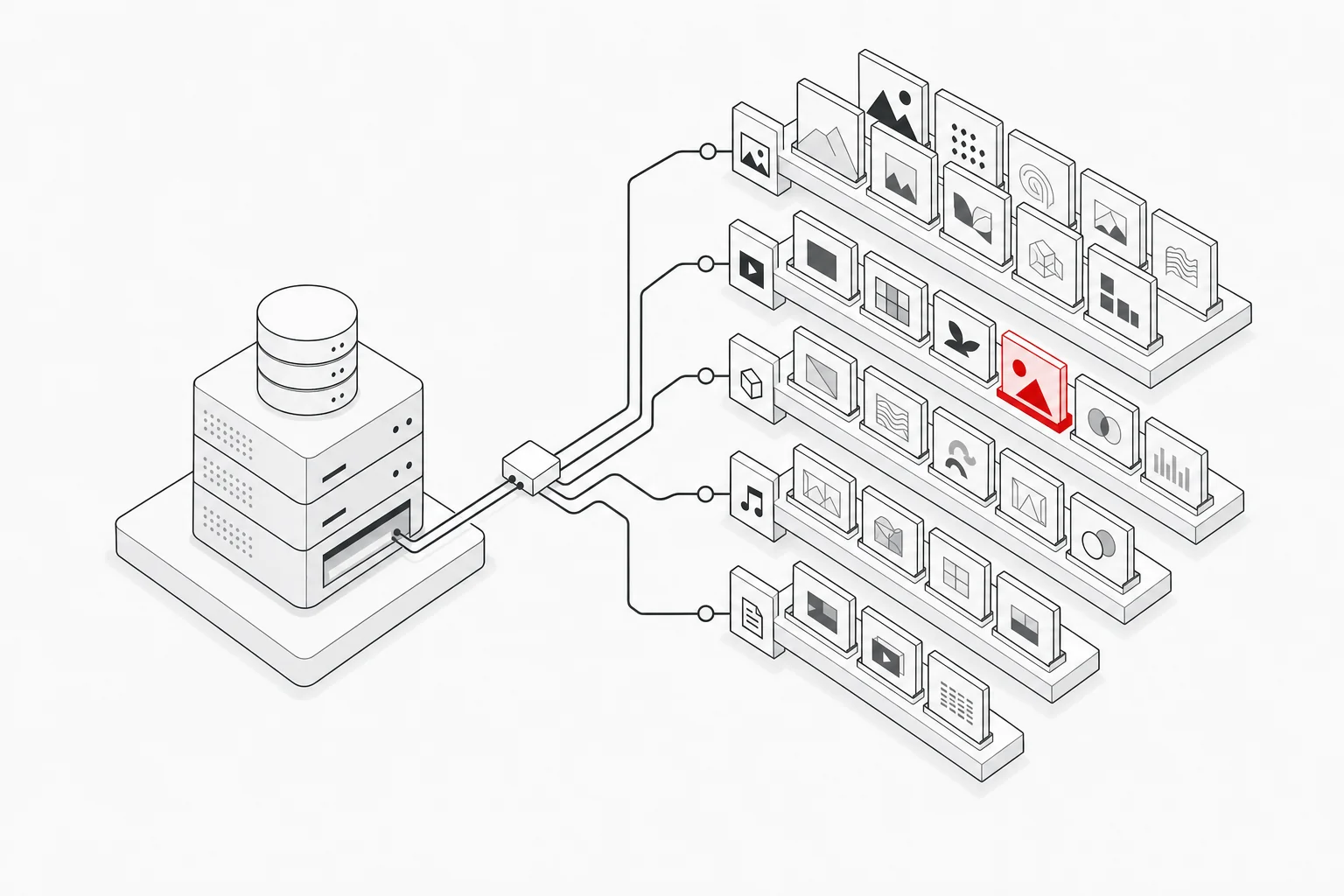
Digital asset management (DAM) is software for storing, organising, searching and sharing media at scale. A DAM gives a team one central, secure home for files (images, video, documents and more) with a structured way to tag, categorise and find them later. It typically combines a searchable library, a taxonomy of folders or tags, version history, access permissions and tools for distributing approved assets to the people who need them. The point of a DAM is to stop valuable media getting lost across drives, inboxes and shared folders, and to make a large collection navigable months or years after it was created. It is, in short, a librarian for your media: very good at keeping things ordered, retrievable and shareable. What it is not, on its own, is a decision-maker about whether a given image is cleared for release.
The stills problem on a production
A film or TV production generates a stills problem that is really five problems at once: volume, versions, rights, search and secure sharing. A unit stills photographer can shoot thousands of frames across a shoot, so volume alone is significant. Those frames exist in versions (RAW and JPG, full sets and selects, retouched and unretouched) that must be kept straight. Each image carries rights obligations, because performers have contractual approval over how they are depicted. The set has to stay searchable, so the right frame can be found by talent, scene or production. And everything must be shared securely, since unreleased stills are sensitive material. A generic media library can ease some of this, but the production’s hardest constraint is not storage; it is clearance. Until each performer has approved or rejected their frames, most of those images cannot be used at all.
What a generic DAM does well, and where it stops
A generic DAM is genuinely strong at storage, taxonomy, search and distribution, and it stops short of clearance. Its strengths map neatly onto part of the stills problem: it gives you a central library, lets you tag and organise large sets, embeds and reads image metadata so captions and credits stay attached and searchable, and provides controlled access so approved assets reach the right people. For an organisation drowning in scattered files, that is real value and worth taking seriously. Where a general-purpose DAM stops is the production-specific logic. It is not built to track actor kill-rights as percentages of a set, to count approvals and rejections against each performer’s contracted limit, or to run a structured cast approval round. A DAM can hold the images and tell you where they are; it does not, by design, tell you which ones a performer has cleared for use. That gap is not a flaw; it is simply a different job.
What a production actually needs first
Most productions need a talent approval workflow before they need a library, because clearance is what turns captured frames into usable images. That workflow has a recognisable shape: curate the set down to a sensible selection, collaborate on key selects, put the right images in front of each performer or their representatives, track every approval and rejection against the contracted kill percentage, and keep a timestamped record of who decided what and when. This is exactly what talent image approval software is for, and it is the example of the workflow a generic DAM does not provide. A purpose-built stills approvals platform such as Image Approvals handles the curation, secure access, automatic kill tracking against contract percentages, key-selects collaboration, reporting and an audit trail: the clearance machinery a production cannot do without. Pair that with consistent image metadata for press stills and a clean route to delivering approved stills, and the cleared images come out searchable, attributed and ready to release. If you want to see that workflow in practice, you can book a demo.
When a DAM genuinely helps
A DAM genuinely earns its place when an organisation has to manage a large media collection over the long term, typically a studio or distributor, not a single production in flight. Once you are holding stills, key art and assets across many titles, for years, the library problem becomes real in its own right: people need to find a frame from a series that wrapped two seasons ago, repurpose it for a new campaign, and share it securely with partners. That is precisely the storage, taxonomy, search and distribution job a DAM does well, and at that scale it is a sensible investment. The important framing is that a DAM and an approval workflow are complementary, not competing. The approval platform decides which stills are cleared for use; the DAM keeps the cleared library organised and findable afterwards. A studio running both gets clearance done correctly up front and a durable, searchable archive behind it: different tools, different jobs, working together. If you are weighing up where to start, talk to us.