
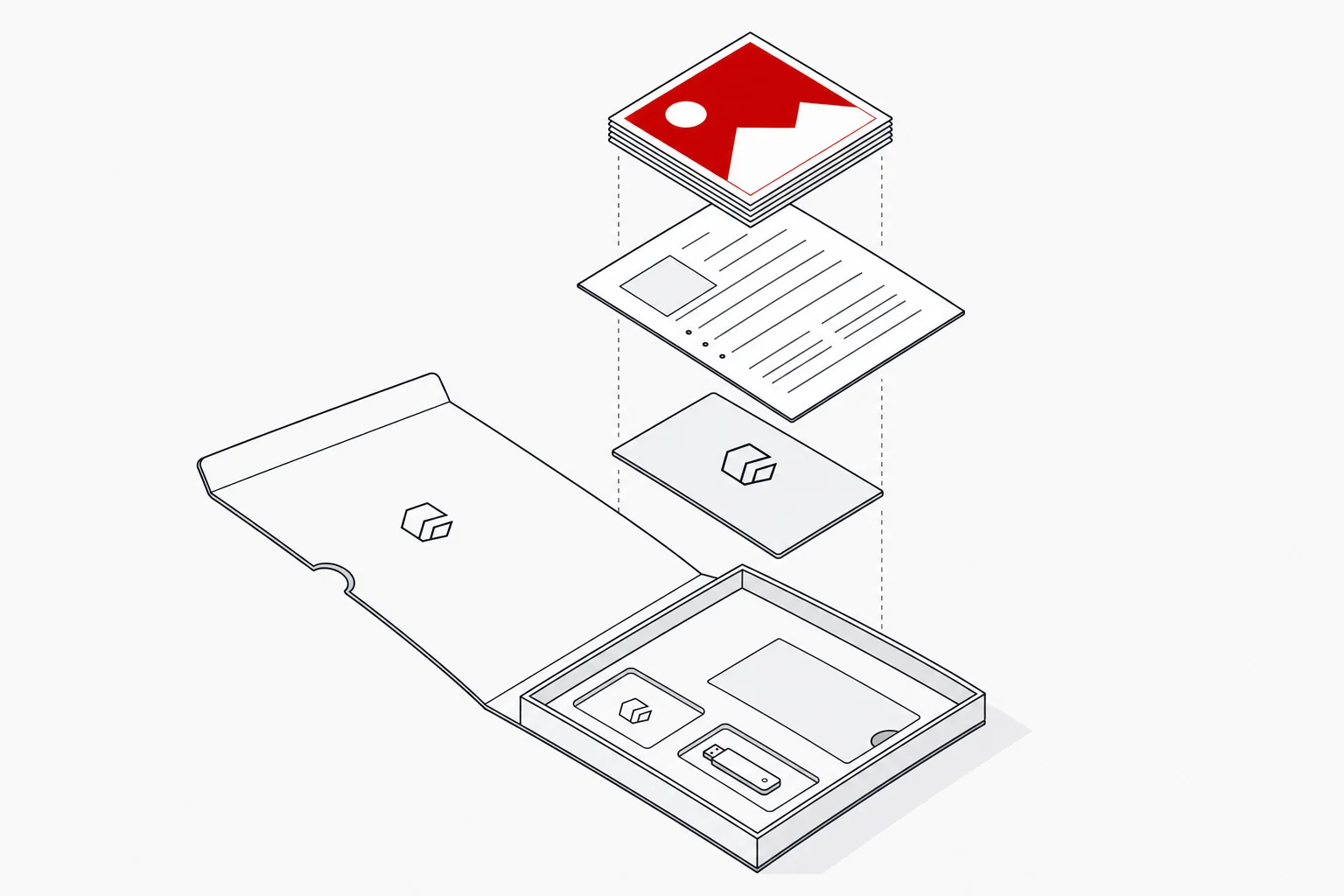
What an EPK is
An electronic press kit, or EPK, is the digital pack a production gives to press and picture desks to publicise a film or TV title. It is the modern, downloadable version of the press pack that publicists once couriered around as physical folders, gathering everything a journalist or picture editor needs to cover a title into one consistent, ready-to-use set. Rather than chasing a publicist for individual assets, an outlet can open the EPK and find approved images, written background and brand materials together. For a production, the EPK is how the story it wants told reaches the people who tell it: accurately, on-brand and with the right images already cleared for release. It is, in short, the official toolkit for talking about a title in public.
What’s inside an EPK
An EPK gathers both visual and written materials. On the visual side it typically holds the approved unit stills, the key art and poster designs, and the production’s logos. On the written side it carries the captions and credits that go with each image, the production notes, a synopsis or logline, and cast and crew bios. Many EPKs also include moving image (b-roll, a trailer, or short interview clips) where these have been prepared and cleared. The exact contents vary by title and by what an outlet is allowed to publish, but the principle is constant: everything in the pack has been approved for release, so a journalist can use any of it with confidence. The aim is a single, coherent set rather than a scattering of files arriving from different sources at different times.
The stills element of an EPK
The stills in an EPK are not the whole shoot. They come only from the approved key selects: the curated handful of frames that have cleared image approvals and been chosen as the public face of the title. Each of those stills should arrive captioned and embedded with metadata, so that the description, photographer credit and usage information travel inside the file itself rather than in a separate document. That matters because an image rarely stays put: it is copied, renamed and forwarded as it moves from a picture desk to a published page, and embedded data keeps each frame credited and identifiable throughout. Good captioning film stills practice, meaning a consistent caption template, a clear photographer credit and a copyright or usage notice written into the metadata, is what turns a folder of approved publicity still images into the dependable, traceable stills element of a press kit.
It is worth including a separate captioning and metadata document alongside the images as well, rather than relying on the embedded fields alone. Not every recipient has software that surfaces the caption held inside a file, and a plain sheet listing each file name against its caption, credit and rights means they can read that information without any special tooling. It also gives you a layer of redundancy: if the stills later pass through a system that strips embedded metadata, the document is the record from which captions and credits can be restored, rather than reconstructed from memory.
Who uses an EPK and how it’s delivered
An EPK is made for the people who publicise and report on a title: journalists and feature writers, picture desks and photo editors, and the broadcasters, publications and online outlets they work for. Each comes to the pack for a different reason: a writer for the synopsis, notes and bios; a picture desk for full-resolution, captioned stills and key art it can publish to deadline. Because of that mix, an EPK is usually delivered as a download from a link, a press portal or a dedicated media site, rather than as a pile of email attachments. That approach keeps the assets together, lets each user take only what they need, and ensures everyone receives the same approved, correctly captioned versions. It also sits naturally alongside the wider job of delivering approved stills to the people who will use them.
What makes an EPK genuinely usable
The difference between a working EPK and a frustrating one is rarely the quantity of material; it is the quality and consistency of it. A genuinely usable EPK presents clean, well-captioned, correctly formatted assets: stills with embedded captions and credits, sensible file names, predictable formats and a clear structure a picture desk can navigate at speed. The opposite is the folder of unlabelled files, where nobody can tell which frame is which, who shot it, or whether it has been approved at all, and where a deadline is missed because the right image cannot be found or trusted. Packaging approved stills to distributor specification, with captions and metadata embedded, is precisely the work Image Approvals does for productions: it is why we exist, and it is what keeps a press kit useful rather than merely full. If a forthcoming title would benefit from that, you can talk to us.