
What kill rights are
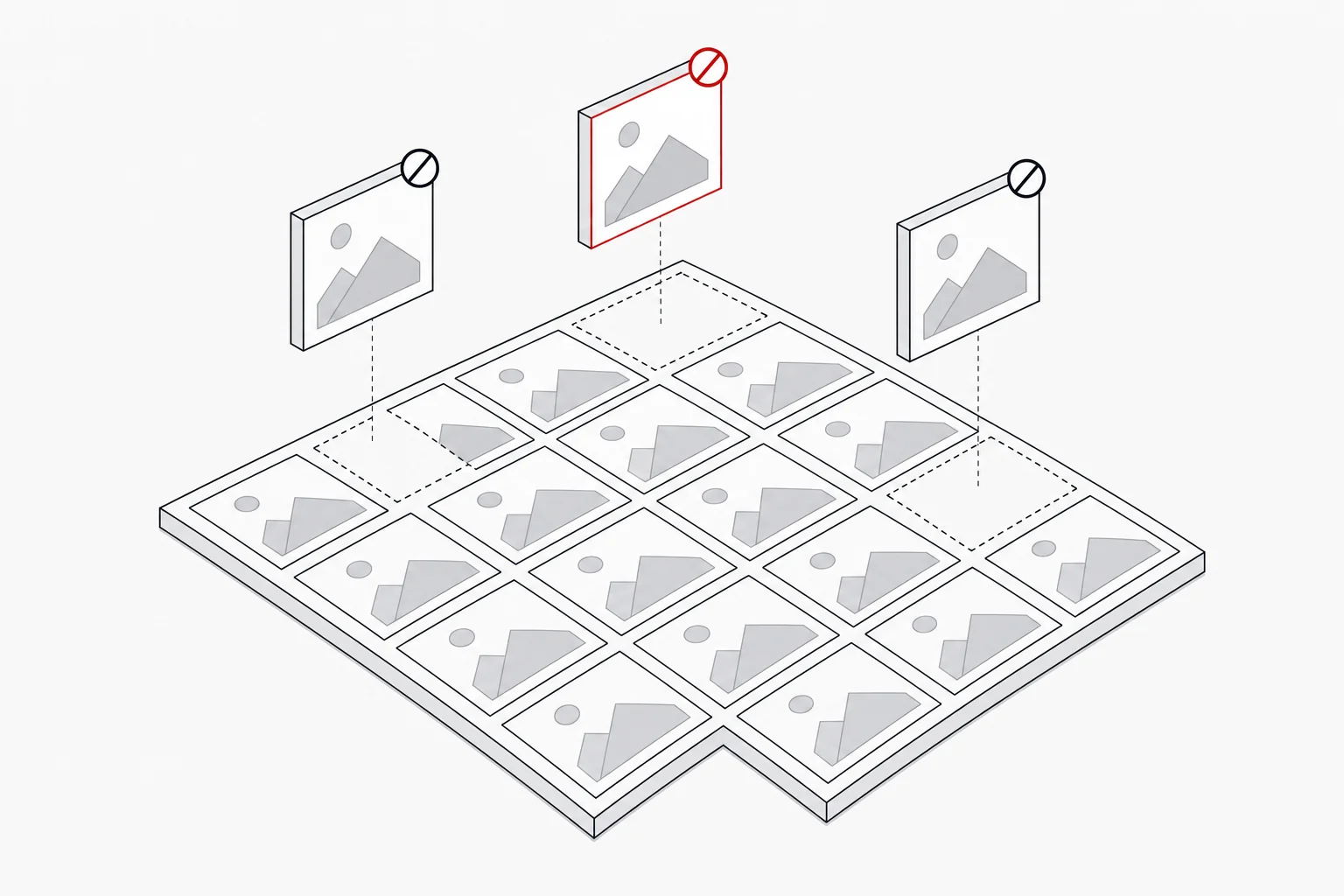
In film and television, an actor’s contract usually gives them the right to review the photographs shot of them and reject any they don’t want used for publicity. Producers most often see this written as an approval right (the actor must approve a minimum percentage of the images they appear in), while the act of rejecting an individual image is known as killing it. The two are the same right described from opposite ends: what must be approved, and what may be killed. Image approvals are tracked on that kill basis, with each image either approved or killed, so this guide uses both terms.
This right is a core part of talent approval: the wider process by which cast review and sign off the images shot on a production: unit stills, gallery shoots and screen grabs alike. It exists so talent retain a say over how they are represented in posters, press, streaming artwork and social media.
Where kill rights come from
Kill rights are negotiated into an actor’s contract, usually by their agent. More established or higher-profile talent tend to negotiate more generous terms. The clause typically specifies:
- the minimum percentage of images the actor must approve (equivalently, how many they may kill) as a share of the photographs they appear in;
- separate figures for solo shots versus group shots, though some contracts set a single flat rate across both;
- who may exercise the right (the actor, their agent, or a publicist); and
- a review window in which approvals must happen so publicity deadlines are met.
Because the right is contractual, getting the numbers wrong is not just an annoyance: it can be a breach. That is why accurate tracking matters so much.
How killing an image works
In practice the production does not simply hand over every frame. Images are curated first, so each actor only reviews the shots relevant to them. The actor (or their representative) then goes through that set and kills the ones they don’t want published, up to their allowance.
A dedicated approvals workflow manages this directly: cast see a controlled selection, approve or kill each image, and every decision is recorded with a timestamp. Killed images drop out of the approved set automatically, and the remaining approved frames move forward for delivery, ready to be refined into a tighter set of key selects by the publicist or producer where wanted.
Solo vs group percentages
An actor usually has separate figures for solo shots (images of them alone) and group shots (where they appear with other cast). Because an actor has more control over a photograph of themselves alone than over one shared with others, they can typically kill more of their solo shots and fewer of their group shots, so the approval minimum is lower on solo and higher on group. A common shape is a minimum of 50% of solo images and 75% of group images approved, though some contracts set a single flat rate across both and the exact figures are always negotiated.
What actually counts as a “group” shot matters, and it is not simply any image with more than one person in it: the precise definition is set by the contract. Our guide to cast approval percentages unpacks how “group” is defined, and how these percentages are calculated, tracked and where productions get caught out.
Managing kills at scale
The concept is simple; the bookkeeping is not. A single production can generate thousands of stills across many shoot days and several cast members, each with their own allowance and their own solo and group limits. Tracking that by hand, across spreadsheets and email threads, is where errors creep in and approved images get lost or, worse, an over-killed quota slips through.
This is the problem talent approval software such as Image Approvals is built to solve: automatic kill tracking against each actor’s contractual percentage, a clear audit trail of who approved what and when, and a clean hand-off of approved images to the distributor. To see how the whole sequence fits together, read how talent image approvals work.