
What talent image approvals are
In film and television, talent image approval is the process by which cast sign off the images shot of them before any are used for publicity. It exists because most actors hold kill rights: a contractual right to veto images of themselves. (Our companion guide explains kill rights in full.)
What images does an actor need to approve? Approval covers every image containing their likeness, not only the frames shot by the unit photographer. In practice that typically means unit stills, gallery images (also known as specials, key art or studio shoots) and screen grabs. All of them go through the same review.
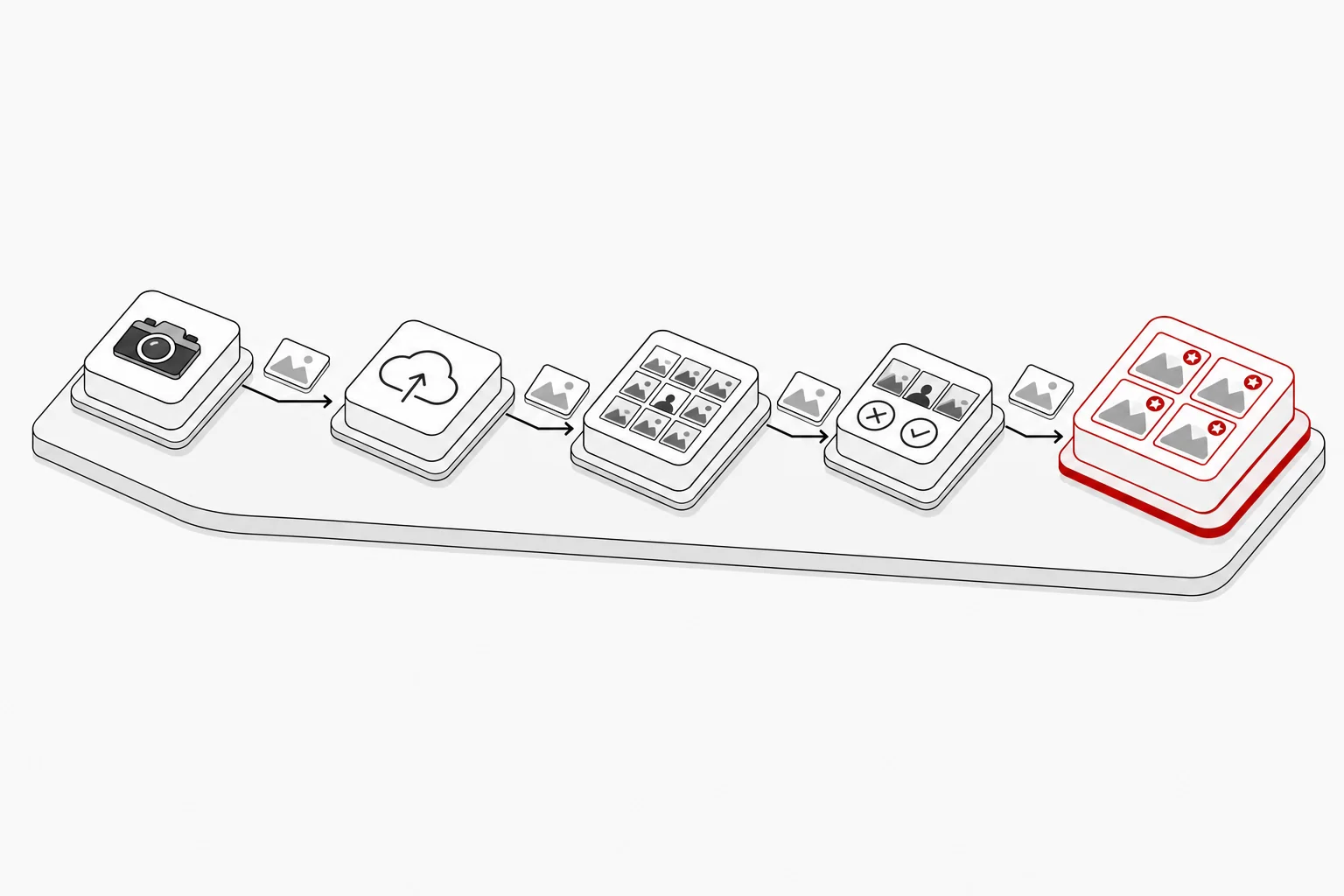
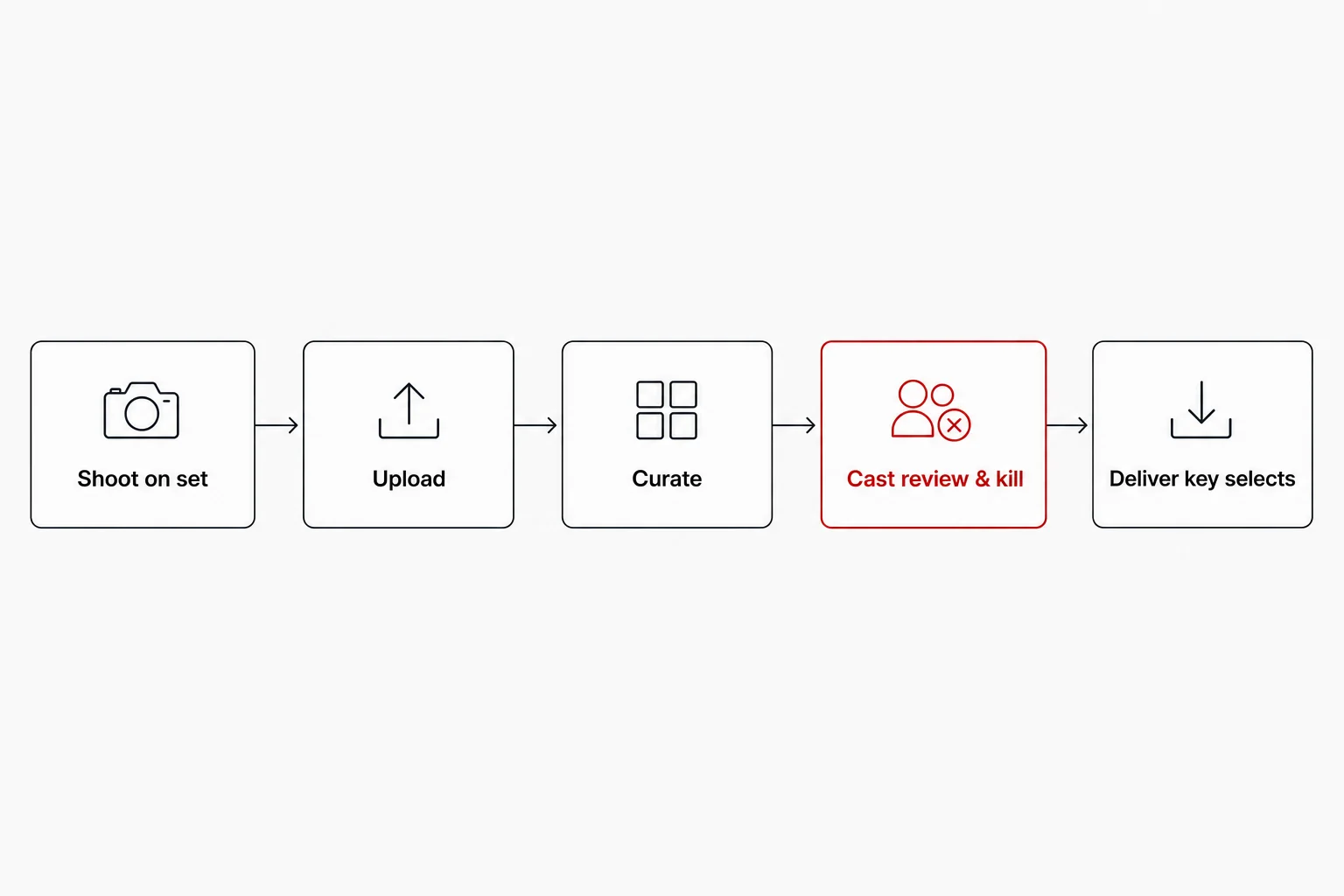
The workflow runs from the moment the shutter fires on set to the clean hand-off of cleared images to the marketing team. Understanding each stage is the difference between a smooth release and a scramble against a publicity deadline. The five stages below describe the full path.
Shooting and uploading the stills
The sequence begins on set with the unit stills photographer, who captures promotional frames alongside principal photography. A single production day can produce hundreds of images, and a full shoot many thousands.
Those frames are then uploaded into the review system. At this point images can be tagged by cast member, scene or shoot day, and (where the production wants an extra layer of protection during review) watermarking can be applied so preview copies cannot leak or be reused. Nothing is shown to talent yet; the raw upload is simply the working pool from which the production will curate.
Curating and cast review
This is the stage that distinguishes a proper approval process from a free-for-all. The production does not hand actors the entire shoot. Instead it curates the pool, so each actor reviews only the images relevant to them. Weak frames, technical rejects and shots an actor was never going to clear are filtered out before review even begins, which keeps the process focused and protects unused material.
If a production struggles with the volume of images, the Image Approvals team can assist with curation. Check out our services page for more info.
Each actor (or their agent or publicist) then works through their curated set image by image: keeping shots they are happy with and killing those they object to, within the limit their contract allows. This is where cast clearance actually happens, decision by decision. A contact sheet gives reviewers a quick overview of the whole set so they can judge it at a glance rather than image by image.
The detail of how the allowances are written and calculated, and the difference between solo and group limits, is covered in our guide to cast approval percentages.
Key selects and delivery
Once review is complete, the killed images drop out and the survivors form the approved set. This cleared set can be delivered to the distributor as it is, or the unit publicist or producer can first refine it into a tighter set of key selects: the strongest cleared frames that will actually carry the campaign: posters, press, streaming artwork and social.
Either way, the images going to the distributor have already cleared talent approval, so the marketing team can use them with confidence: there is no risk of publishing an image an actor has killed, and no last-minute re-clearing under deadline.
The audit trail and the software
The concept is straightforward; the bookkeeping is not. Each actor has their own allowance, their own solo and group limits, and their own representative making decisions, across thousands of frames and several shoot days. Doing that by hand, across spreadsheets and email threads, is exactly where approvals get lost and miscounts slip through.
This is the problem a dedicated talent approvals platform is built to solve, and it is what Image Approvals is for. It tracks every kill automatically against each actor’s contractual percentage, records who approved what and when in a timestamped audit trail, and delivers a clean, cleared set ready for the distributor. If a dispute arises later, the record shows precisely what was decided and by whom. You can see it in action with a short demo, and we’ll happily put together a free quote for your production.