
What a talent approval clause is
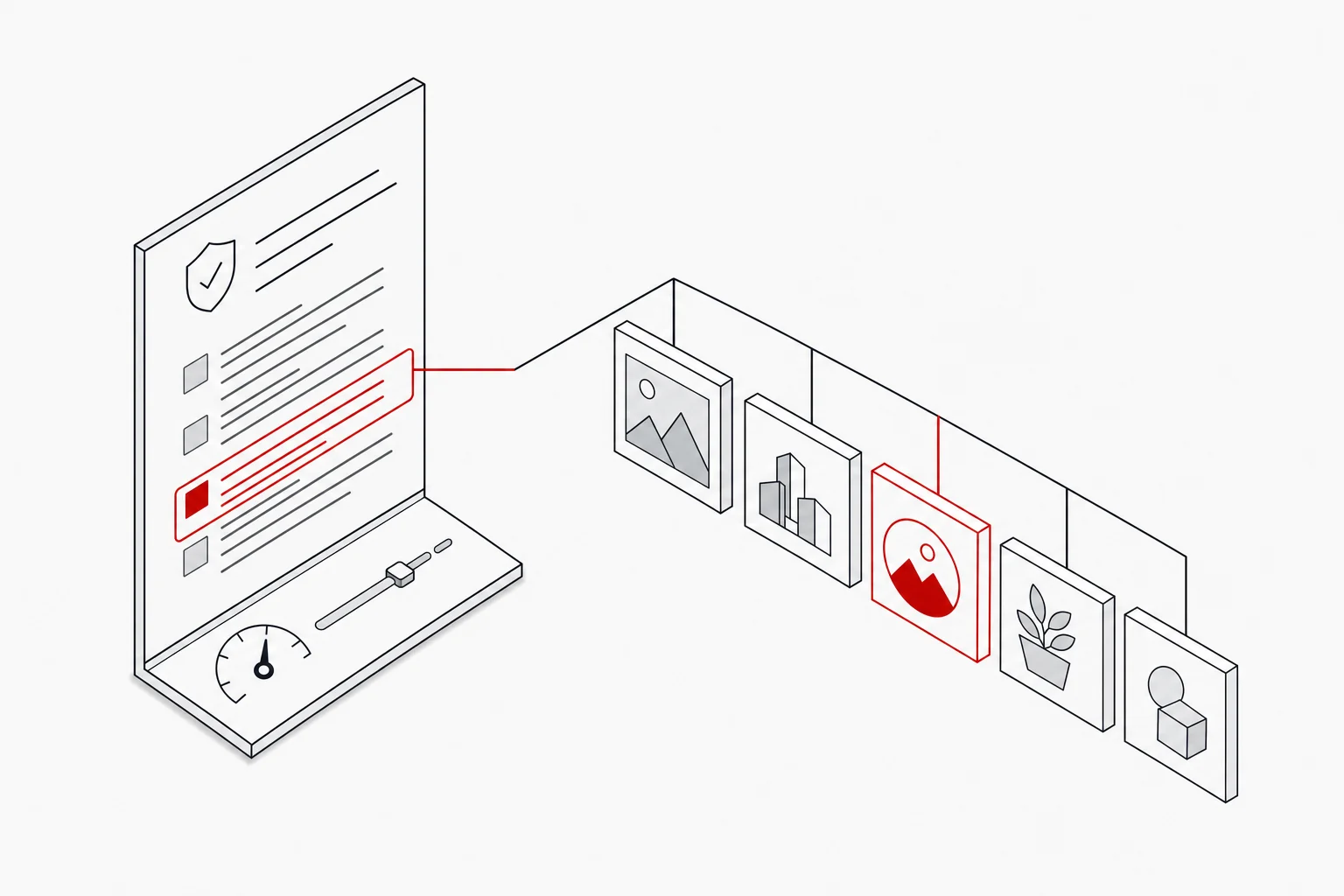
A talent approval clause is the contractual right that lets an actor review and, within limits, veto the publicity stills they appear in. Sometimes called an image approval or photo approval clause, it sits within an actor’s contract and gives talent a say in how they are represented in posters, press, streaming artwork and social media. This is an educational overview rather than legal advice, and the precise terms are always set by the contract itself.
In everyday usage the right to reject an image is known as kill rights, and the wider review-and-sign-off process is called talent approval. The clause is what turns that process into an enforceable obligation: once it is in the contract, getting it wrong can amount to a breach rather than a courtesy lapsed.
What the clause typically contains
Most talent approval clauses share a recognisable set of components, even though the exact wording differs from contract to contract. They usually specify the minimum approval percentage, the split between solo and group shots, a review window, who may exercise the right, and the scope of what is covered.
- The minimum approval percentage: the heart of the clause, and the thing to read carefully. Contracts are written the positive way round: they state the minimum share of the images an actor appears in that the actor must approve, rather than a quota of images they are permitted to reject. A common shape is a minimum of 50% of solo shots and 75% of group shots approved, though some contracts set a single flat rate and the exact figure always comes from the contract itself. The clause usually pairs that minimum with the review window, and provides that any image the actor has not actively killed within that window is deemed approved. That default is what makes the clause workable: a production can establish the approval status of a set even where an actor or their representative does not engage with the review. It is also why the day-to-day process is run on a kill basis: kill rights are the decisions actually recorded against images, and everything not killed stands as approved once the window closes.
- Solo versus group limits: separate approval minimums, because an actor has more control over a photograph of themselves alone than over a shared frame, so the group figure is typically the higher of the two. A well-drafted clause also defines what counts as a group image, and this is the definition to check. Best practice, and the most common wording, treats a group image as one containing more than one actor who holds approval rights; anything else is treated as a solo image. So an actor with approval rights photographed alongside three other actors who hold none would usually still have that frame counted among their solo images. The definition can vary between agreements, though, so read the contract wording closely rather than assuming. The detail is unpacked in cast approval percentages.
- A review window: the time the actor has to respond. Cast contracts often give roughly 3–7 working days, though productions vary.
- Who may exercise it: the actor, or their agent or publicist acting on their behalf.
- Scope: which images the right covers. In practice this is every image the actor’s likeness appears in: unit stills, gallery shoots and screen grabs. This overlaps with the wider question of image rights and likeness clearance.
How the figures vary
The numbers in a talent approval clause are negotiated, not fixed, so they vary considerably between productions and between cast members. Higher-profile talent often negotiate lower approval minimums, giving them more latitude to reject images, while supporting cast may face higher minimums or, in some cases, hold no approval right at all. The split between solo and group shots, the length of the review window and the precise definition of “publicity use” can all move depending on the deal.
Because of this variation, it is unwise to assume a standard figure applies. Two actors on the same production can hold different minimums, and the same actor may agree different terms on their next job. Treat any commonly quoted range, including the “50% of solo shots” shape above, as an illustration of typical practice rather than a rule, and always work from the actual contract.
What it means for a production
It helps to see the clause as two commitments pulling in different directions, one on each party. The production’s commitment is to give the actor a genuine opportunity to approve their images: to put the relevant frames in front of the right person (the actor, their agent or their publicist) and to open a review window in which they can work through them. The actor’s commitment is to use that opportunity: to make their decisions inside the window, and to approve at least the contracted minimum of their solo and their group images.
The weight therefore sits differently on each side. The production is judged on whether the opportunity was properly given and the process properly run, not on the numbers the actor arrives at; a producer may, at their discretion, extend a window where circumstances warrant it. The actor is judged on the numbers and the deadline. And because anything not actively killed within the window is deemed approved, the clause resolves even when an actor does not engage, provided the production can show the images were served, to the right person, for the agreed period.
That evidencing is the practical burden, and it means accurate per-person tracking across what can be thousands of stills and several cast members, each with their own solo and group figures, plus a timestamped record of who decided what and when. This is exactly what talent image approval software is built to handle: Image Approvals puts each actor’s curated set in front of them, counts their approvals against the minimum their contract sets, and keeps the audit trail throughout.
Common pitfalls
The clause causes most trouble when its terms are clear but the process around it is not. A handful of recurring pitfalls account for the bulk of disputes:
- Vague wording: clauses that leave the approval minimum, the solo/group split or the definition of “publicity use” ambiguous, so nobody is sure where the line sits.
- Miscounting at scale: losing track of where each person stands against their minimum when frames run into the thousands across multiple shoot days.
- Missing the review window: letting the agreed turnaround lapse and stalling publicity, or forcing a rushed sign-off.
- No audit trail: being unable to prove, after the fact, who approved what and when.
Most of these are tracking problems rather than legal ones, which is why a reliable approval workflow matters as much as the contract language. If you would like to see how approvals are tracked against each contract in practice, you are welcome to book a demo or get in touch. For the terms of any specific production, take professional advice.