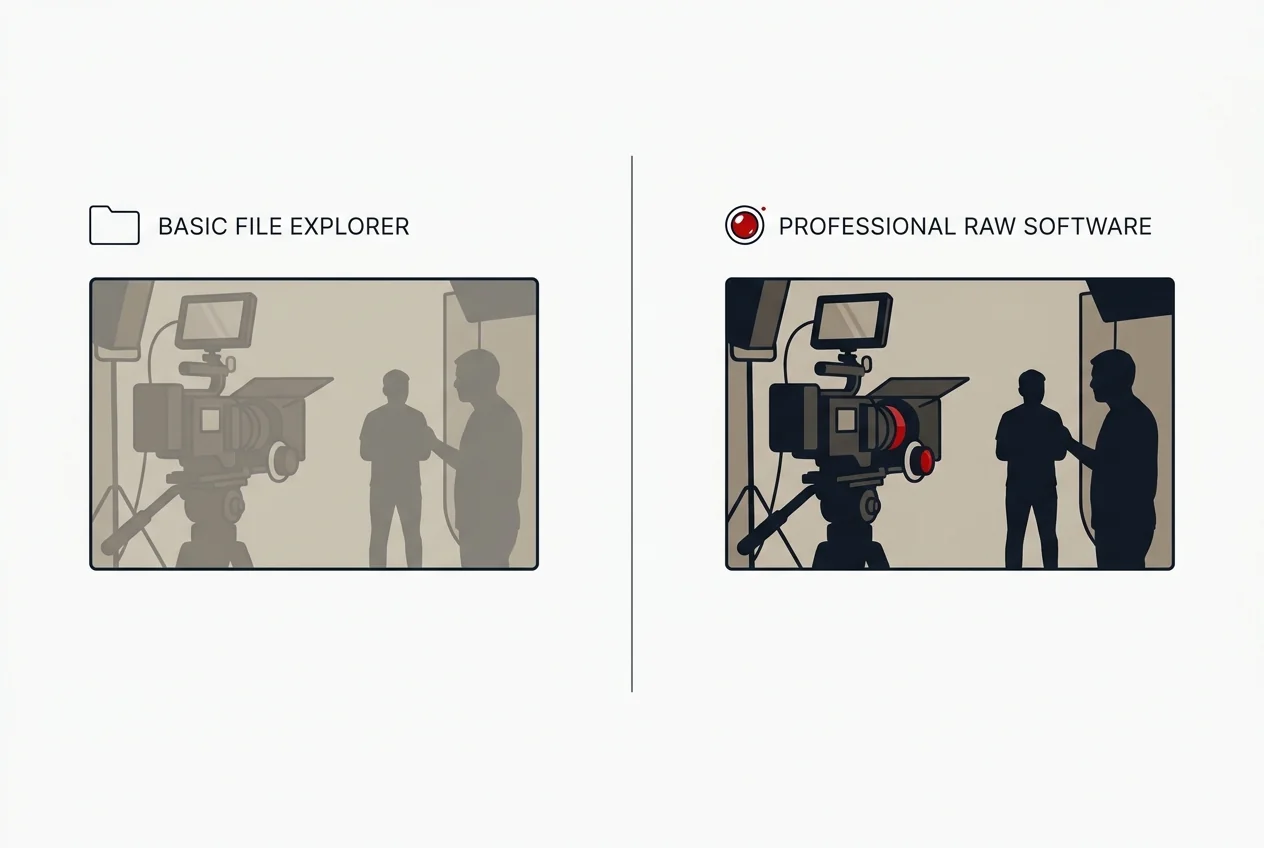
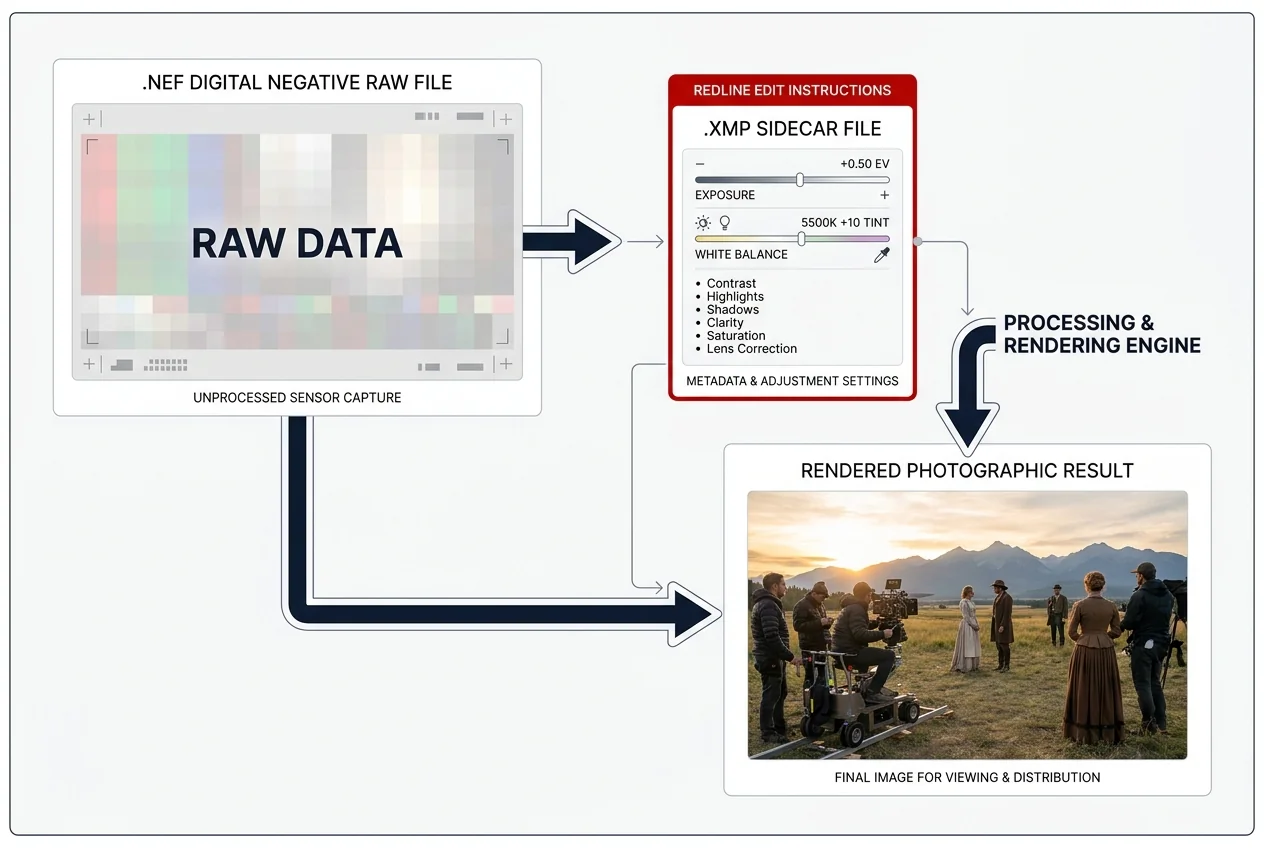
RAW files are the “digital negatives” captured by professional cameras. Unlike JPGs, which the camera processes and compresses on the spot, RAW files contain all the unprocessed data straight from the sensor, giving photographers maximum flexibility for editing and colour correction.
It is more accurately a data file than an image. A RAW file stores unprocessed sensor data, not a finished picture. There is no baked-in white balance, contrast or sharpening. What you see on screen is a rendered interpretation, not the file itself, which is why the same RAW can look different in Capture One, Lightroom or Bridge.
Edits are instructions layered on top (XMP, sidecars, databases) that tell software how to show the image, not changes to the core data. The key distinction: an image file is the picture; a RAW file describes how a picture could be made.